

Toeing-in
Draft — clinical review required1 · Observe2 · Locate3 · Explain4 · Connect
Heel → second metatarsalDirection of travel ↑
7° outward · illustrative
Heel → second metatarsalDirection of travel ↑
18° inward · illustrative
0%20%40%60%80%100%
Observed deviation · Foot axis points inward relative to travel
Look from above and follow the direction of walking.
0:00 / 0:52
Inspect gait moment · 0.0%
Illustrative demonstration angles and event timing · 0° is the reference, not a diagnostic cutoff. Close-ups are schematic; the standard figure supplies walking context.
Foot axis points inward relative to travel
Go deeper
Open each part when you are ready.
Observed movement
- Foot axis points inward relative to travel
Example mechanism
- Rotational alignment (source not identified)
- A movement pattern alone does not establish its cause.
Teaching narration
- Look from above and follow the direction of walking.
- Draw one line along that direction and another from the heel toward the second metatarsal.
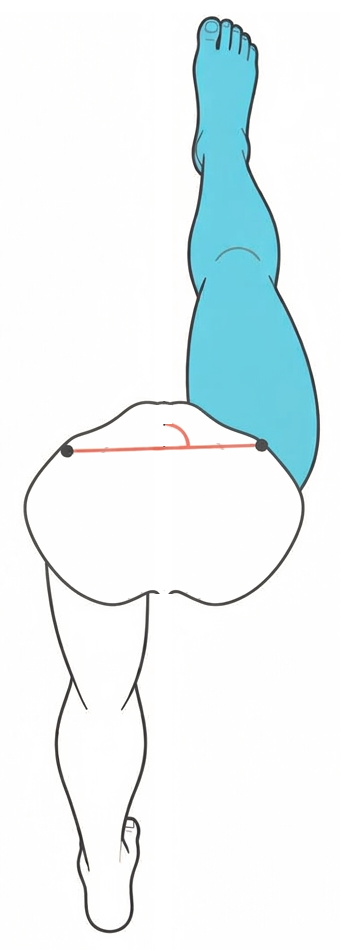
- With toeing-in, the foot axis points inward relative to the direction of travel.
- This orientation can arise from the hip, the tibia or the shape of the foot.
- Watch the thigh, knee and foot together to locate where the rotation appears.
- Toeing-in is different from inversion: a foot can point inward without rolling onto its outer border.
- Its clinical relevance depends on the individual, their symptoms and their function.
Connect — related deviations
Apply it
What can this animation establish?
Sources and review status
Draft — clinical review required
Starting points for verification. Validated protocols are linked where available; clinical content has not yet been reviewed.
Learning objectives
- Identify the observed movement and its timing.
- Distinguish the observation from a possible contributor.
- Compare this feature with related deviations.